

Your portal, in their pocket.
Native iOS and Android apps built on the same portal, the same permissions and the same back-office wiring. Every notification becomes a push. Face ID on the way in. One sign-in across everything we build for you.
Built with Expo and React Native. One codebase, both stores, shipped through TestFlight and Google Play.Tickets
Open · 3Tickets, the conversation, the roadmap, sign-off, notifications.
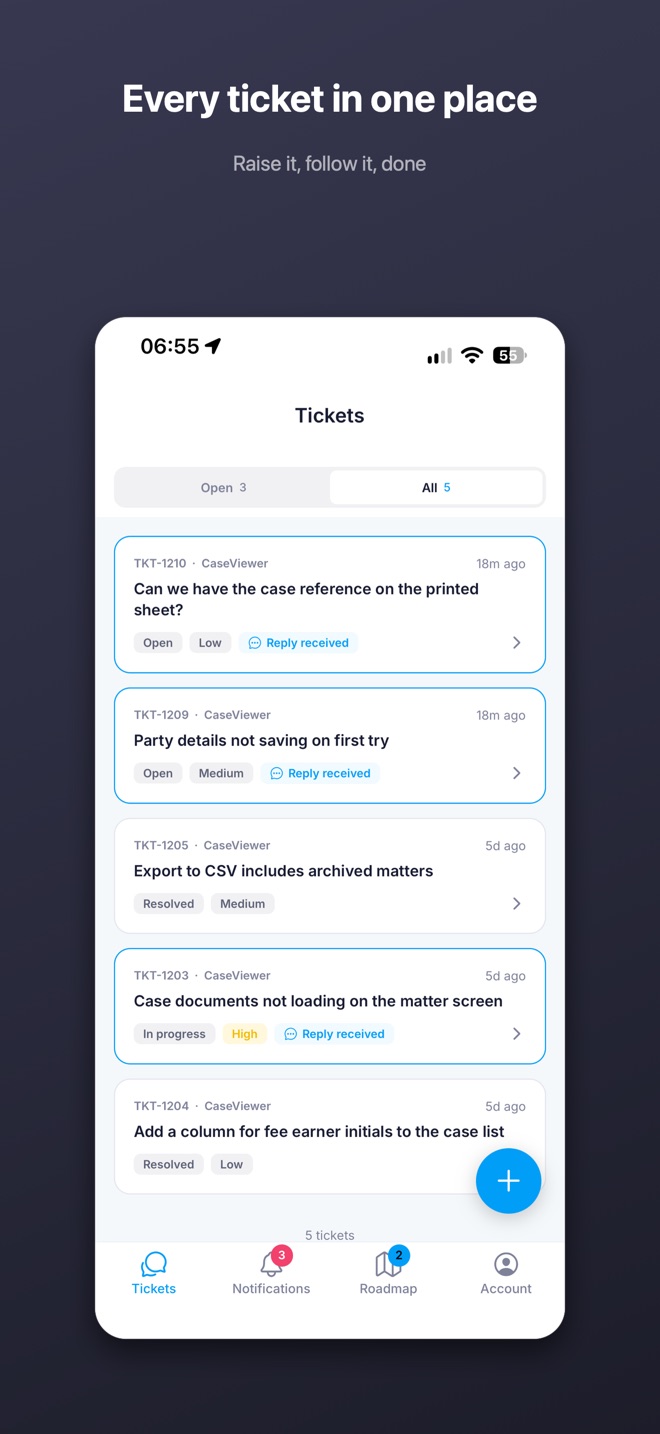

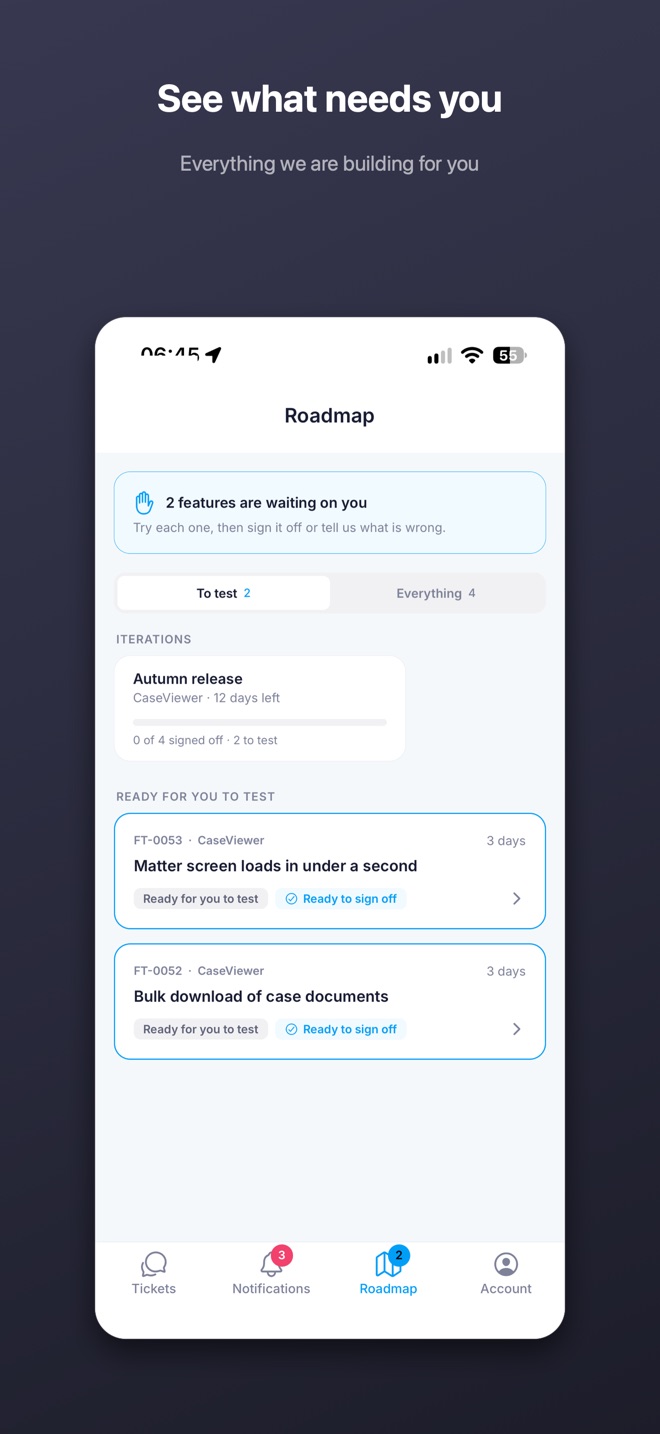


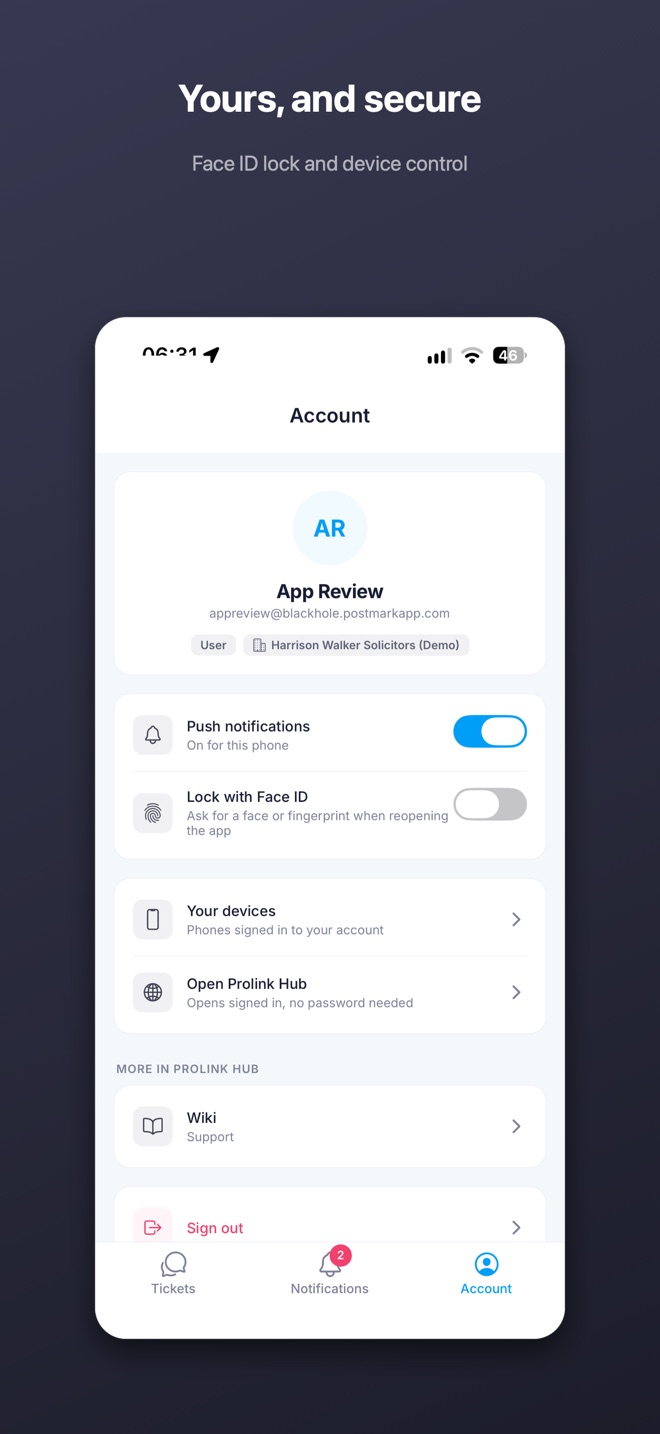
Two native apps, built the same way, on the same platform.
Both run on Prolink Hub for sign-in and push. Both were listed, screenshotted and submitted by us, with a demo account for the reviewer and the privacy and support pages the stores require.
Prolink Mobile
The support hub in your pocket. Tickets with attachments and threads, a notification inbox with a push for every bell, roadmap features to sign off, account and devices. Staff get assignment and status from the phone.
Flute by Prolink · Smurfit Westrock
The native companion to Flute, Smurfit Westrock's enquiry workflow. Signs in through the Hub with a token scoped to Flute only, then talks to Flute's own API. Push notifications come from the Hub when Flute's rules fire.
Everything the portal does, plus the things only a phone can do.
A push for every notification, deep-linked to the record.
When something happens in the portal, the phone knows. Tap the push and you land on the ticket, the quote or the appointment, not the home screen. Every push is logged so you can see what was sent, to whom, and whether it arrived.
One sign-in across the family.
Prolink Hub is the identity provider. A device token is scoped to one app, slides for 180 days, and can be revoked from the admin alongside web sessions.
Face ID, no secrets on the device.
The app holds one credential, the person's token, in the Keychain. It locks behind biometrics after a minute in the background. There is no app secret to leak.
Same permissions as the web.
The app never decides what someone may see. It renders what the server allows, and out-of-scope records answer not found. Deny by default, on both.
Camera, photos, signatures.
Accident reports, guarantee claims, vehicle checks, on-screen signatures. The jobs that are painful on a mobile web page and natural in an app.
Not every portal needs an app. Here's when yours does.
We build both. A responsive web portal is often enough, and we'll say so. These are the signals that a native app pays for itself.
Go native when
- People need to be interrupted: a push for a reply, a slot, a declined payment.
- Work happens in the field: fitters, surveyors, agents, drivers, with photos and signatures.
- Sign-in friction costs you: Face ID beats a password on a doorstep.
- Staff live on their phone: tickets, approvals, sign-offs between meetings.
Stay on the web when
- Customers use the portal a few times a year, at a desk.
- The value is in documents and forms, not notifications.
- Offline matters more than push: a service-worker app covers a courtroom with no signal.
- You want to ship this month and learn before committing to store reviews.
The app is built on the portal, not beside it.
Scope the screens
Which three things people do on the phone. Usually fewer than you think.
Build on the portal's API
Same endpoints, same permissions, same audit trail. No second backend.
TestFlight with your team
Real devices, real data, before anyone outside sees it.
We handle the stores
Listing, screenshots, privacy and support pages, a reviewer demo account.
Kept running
Every release published to your Hub changelog. Devices revocable from the admin.
See it on your own phone.
We'll put a TestFlight build in your hands and walk through what a native app would add to your portal, and whether it's worth it yet.
0800 246 1101 · hello@prolink.io · WhatsApp